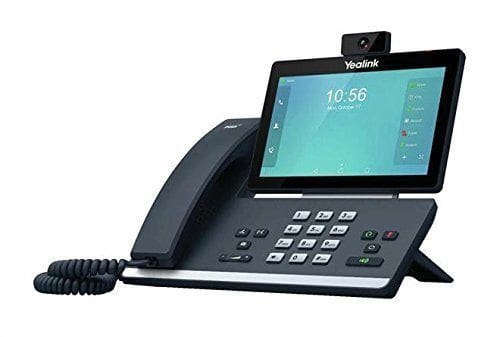
Quotable Answer: Small businesses in Atlanta typically save 30% to 50% by switching from a traditional landline system to hosted VoIP, largely because VoIP eliminates costly on-premise hardware, per-line installation fees, and long-distance charges. Lanstar Voice & Data, LLC’s SIP trunking service can cut combined phone and internet costs by up to half for businesses still running legacy phone lines.
Plenty of small business owners in Atlanta are still running the same phone system they installed a decade ago — and the reasoning is usually some version of “if it’s not broken, don’t touch it.”
The problem is that a landline system doesn’t have to be broken to be quietly overpriced. It just has to be old, and many are.
This post walks through where the actual cost gap between landlines and hosted VoIP comes from, so you can see whether switching makes financial sense for your business.
Landline Costs vs. Hosted VoIP Costs, Side by Side
A traditional landline or on-premise PBX system carries costs that don’t always appear on the monthly bill the way a VoIP subscription does.
| Cost Category | Traditional Landline/PBX | Hosted VoIP |
| Upfront hardware | $3,000–$15,000+ PBX system | Minimal — phones only, cloud-hosted |
| Installation | $500–$2,000+ per line run | Typically included or minimal |
| Monthly per-line cost | $30–$60+ per line | $20–$40 per user |
| Long-distance charges | Often billed separately | Usually included |
| Maintenance/repair | Billed per incident; parts may be scarce | Often included in monthly service |
| Multi-location support | May require separate systems or costly trunking | One system can support multiple locations |
The monthly per-line comparison alone can look relatively close. It’s the categories many business owners forget to price out — installation, hardware refreshes, and maintenance — where the real gap can open up.
For businesses considering a cloud-based phone system, Lanstar Voice & Data, LLC provides business communications solutions for companies in Atlanta and North Georgia.
Hidden Costs of Traditional Landlines
Installation and Line Fees
Every physical phone line into a building can come with an installation cost. Adding another line later also may require a technician visit rather than a simple software change.
For businesses that have grown since their phone system was installed, retrofitting additional lines onto an aging PBX can become expensive. In some cases, the cost of adding capacity may make a complete VoIP migration worth considering.
This is particularly relevant for home service and construction companies that add employees, locations, or dispatch staff over time.
Long-Distance and Toll Charges
Many legacy phone plans separate local and long-distance calling, with per-minute charges for calls outside a defined local calling area.
For a business handling calls from clients, vendors, and partners outside Metro Atlanta, these charges can add up over time. The impact becomes more noticeable for companies conducting business throughout Georgia and neighboring states.
Hosted VoIP generally packages calling into a predictable service structure, although the exact inclusions depend on the provider and plan.
Hardware Maintenance and Replacement Parts
This is the cost category that catches many business owners off guard.
An on-premise PBX can become expensive to repair as it ages, particularly when manufacturers discontinue support or replacement parts become difficult to source.
When something breaks on a system that is 8, 10, or 15 years old, the business may face a choice between paying for a specialty repair and replacing the system altogether.
Hosted VoIP shifts much of that infrastructure away from the business premises, reducing the need to maintain a traditional PBX.
What Hosted VoIP Replaces — And What It Saves
Hosted VoIP moves the phone system out of an office equipment closet and into a cloud-hosted environment.
That shift can eliminate or reduce several traditional cost categories:
- On-premise PBX equipment
- PBX maintenance and repairs
- Physical line installation for additional users
- Certain long-distance charges
- Large hardware replacement projects
- Complex multi-location phone infrastructure
Instead, businesses typically pay a monthly per-user rate that can scale with headcount.
Adding a new employee may mean adding a seat. When an employee leaves, a business may be able to remove or reassign that seat rather than maintaining a physical phone line.
That flexibility can be especially valuable for seasonal or growing businesses.
Businesses interested in a specific cloud communications platform can also explore Lanstar’s Avaya Cloud Office service to see how a hosted system can support business calling and collaboration.
A Real Atlanta Cost Comparison Example
Consider a five-person professional office in the Atlanta area — such as a small law firm, accounting practice, or church administrative office.
Traditional Landline Setup
- 5 lines at roughly $40/month each = $200/month
- Long-distance charges = $30–$75/month
- Annual maintenance/repair average = $40–$80/month amortised
- Estimated monthly total: $270–$355
Hosted VoIP Setup
- 5 users at $30/month average = $150/month
- Long-distance = Included
- Maintenance = Included in subscription
- Estimated monthly total: $150
That produces an estimated savings range of approximately 40%–55% for this example.
Actual savings will vary based on the provider, contract, number of users, calling requirements, hardware, internet service, and existing phone infrastructure.
Businesses that also consolidate telecommunications services through SIP trunking may have another opportunity to reduce their overall communications costs.
When a Landline Might Still Make Sense
To be fair, there are situations where keeping a traditional phone system temporarily may make sense.
For example, a business might have:
- Unreliable internet service
- An existing contract with significant early termination fees
- Specialised equipment that still requires traditional connectivity
- A phone system that was recently installed and has years of useful life remaining
These situations don’t necessarily mean landlines are permanently more economical. In many cases, they simply mean the timing of a transition needs to be evaluated carefully.
A business should compare the remaining cost of its existing system against the full cost of migrating before making a decision.
How SIP Trunking Adds Additional Savings
Businesses that aren’t ready for a full hosted VoIP migration may want to consider SIP trunking as an intermediate option.
SIP trunking can replace traditional physical phone lines with virtual connections that use an internet connection. This can reduce the number of physical lines required while allowing a business to continue using certain existing phone-system infrastructure.
Lanstar Voice & Data offers SIP trunking for businesses looking to modernize their communications setup without necessarily replacing everything at once.
For companies evaluating a broader cloud communications transition, the Lanstar Voice & Data website provides additional information about available business communication solutions.
If you’re weighing whether the savings justify making a change, the guide on what it actually costs to switch to hosted VoIP breaks down migration fees, number porting, and ways to minimize downtime during the transition.
For the full per-user pricing breakdown behind the numbers used here, see the guide to hosted VoIP pricing per user in Atlanta.
Frequently Asked Questions
Is hosted VoIP cheaper than a landline for small business?
Yes. Many Atlanta businesses can save approximately 30%–50% by moving from traditional landline or on-premise phone systems to hosted VoIP, although actual savings depend on the existing system and selected VoIP plan.
What hidden costs come with traditional landlines?
Common additional expenses include installation fees, hardware maintenance, long-distance charges, replacement parts, technician visits, and eventual PBX replacement.
Does switching to VoIP require new hardware?
Not always. Some hosted VoIP systems can work with compatible existing equipment, while other deployments may use new IP phones. A provider can determine which existing hardware can be retained before migration.
Final Takeaway
Hosted VoIP can be significantly less expensive than a traditional landline or on-premise PBX system when all costs are considered.
The biggest savings often come from eliminating or reducing PBX hardware, physical line installation, maintenance, and long-distance charges. For Atlanta small businesses, a 30%–50% reduction in communications costs can be achievable, but the right comparison should include every current and future expense rather than looking only at the monthly phone bill.
Before switching, compare your existing monthly service, maintenance, hardware replacement needs, long-distance charges, and contract obligations against a complete hosted VoIP proposal. That gives your business a much clearer picture of the actual return on a migration.